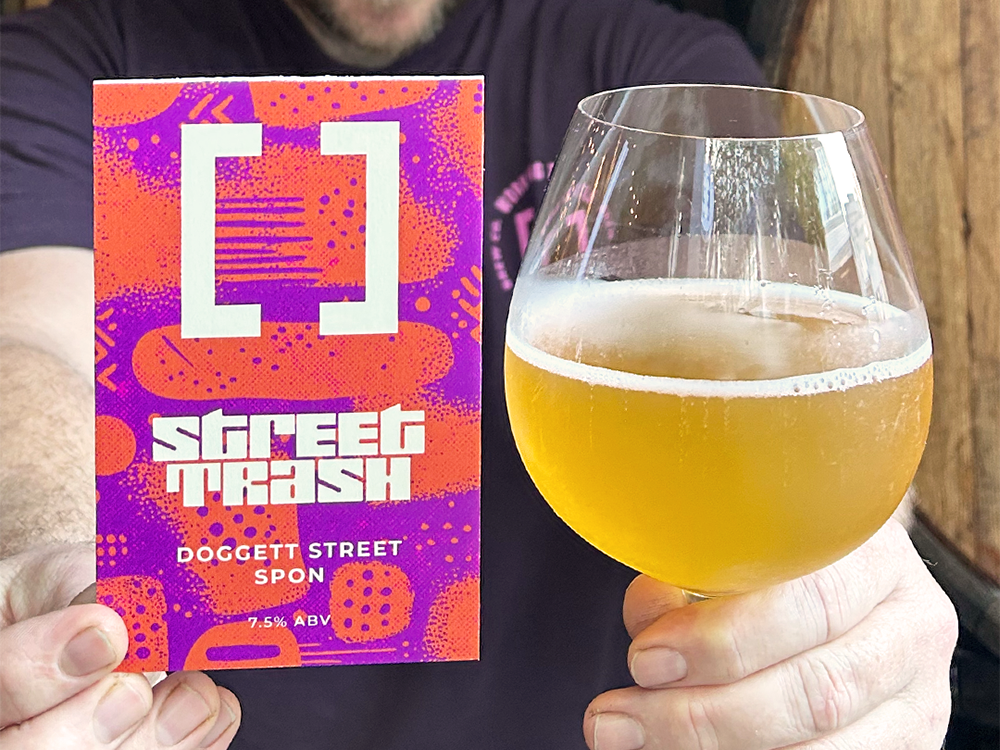

Inspired by the great Houses of the Senne Valley, our Spon program is patiently growing in its form. A mixed culture of native yeast and bacteria was captured on my family farm in Maleny. In its third release, a combined effort of five years of labour, we see a 9 month barrel ferment, conditioned on Tasmania Pepperberry and Lemon Myrtle.
Words alone fail to completely purvey what this culture is. For the third time it has finished at 3.5P, with a pH of 3.1. Even with BUs pushing 15 (maybe - as we used aged hops this is a guess at best), the acidity is always consistent. Three ferments, three releases, all with the finishing specs. I believe, the unusual terminal specs are indicative of non-canonical fermentive microorganisms.
The concept for this program was always to achieve a version of releases akin to that of Cantillon. With enough biomass to ferment thousands of litres, we can finally begin to play around a bit. For me, Cantillon stands apart not solely from their base expression, but due to the rich array of exotic produce they infuse, in commercially terrifying amounts. From Blue Honeysuckle, to Bilberries, Verbena, Elderflower, Gentian, various local grape varieties and musk, Cantillon’s thirst for adventure is brave.
With its isolated phylogenetics, Australia presents a truely incredible array of unique flavours. So to kick off this Aussie ambrosial adventure, we’ve started with some classics. Tasmanian Pepperberry, a dissonance inducing array of red berry and white pepper, along with Lemon Myrtle, that classic wooded lemon twang, a bit herbaceous but super citrus-y. Combined, they bring complexity. And while all those flavours are present in the beer, the inherent bitterness of the spices masks some of the acidity in the base, bringing the beer into balance.
Journey before destination (yes, we all love Kaladin); after five years of trial and error, we are ready to begin.

Fermentation
Australian Wild Beer: Tasmanian Pepperberry & Lemon Myrtle
Explore our Australian wild beer program, featuring native yeast from Maleny and Tasmanian Pepperberry and Lemon Myrtle aged in barrel.